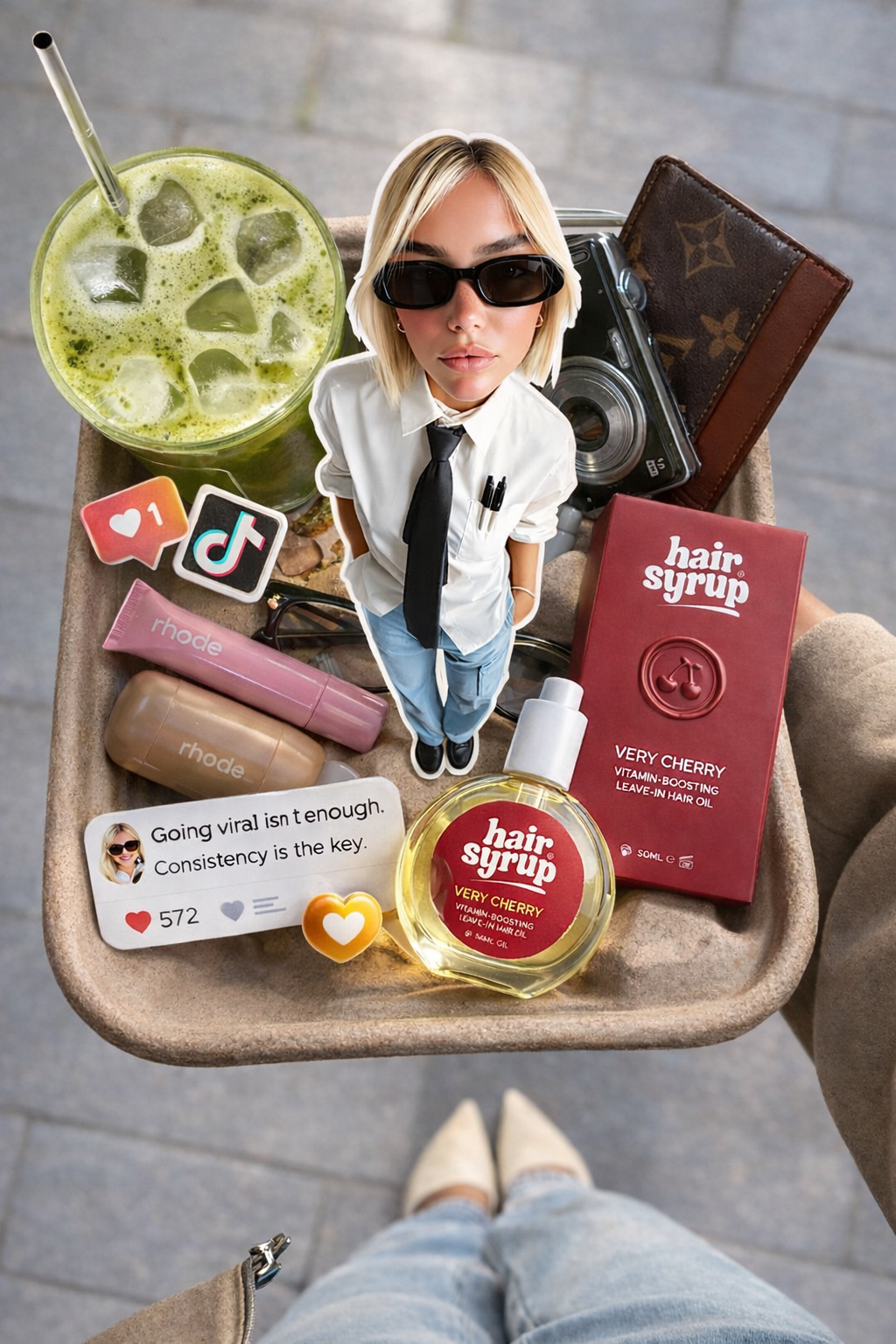
Little treat culture is exactly what it sounds like: rewarding yourself with small, joyful lift-me-ups throughout the day.
Think of it as a modern evolution of the lipstick effect - an economic theory that says during times of financial stress, consumers move from buying big-ticket buys like homes and spend on smaller more accessible luxuries instead.
An iced coffee on the way to work. A sweet treat as a mid-afternoon reset. A Friday night snack plate.
The trend, now widely dubbed ‘treatonomics’ or little treat culture, has blown up on socials with new-to-shelf product showcases, taste tests and weekly food shop hauls spreads all thriving online.
So when treats are part of a consumer’s routine, how do brands become part of that?
Turn Everyday Moments Into Relatable Content
The treat economy lives on the idea that small purchases can hold emotional charge, so influencer content should integrate products into moments worth celebrating.
Brands can work with creators who tap into ‘little treat’ niches on socials, like Stephanie Jakubek, who posts savoury snack plates and spreads on Tiktok. Her video on assembling a savoury snack plate hit 5.8M views alone! The savoury snack trend, which is really an evolution of Girl Dinner, is ideal for food brands to integrate their products.
Or look at @cripandip recurring series "Carbs before a night out are a must", which perfectly captures treat culture, framing pre-event cooking as an indulgent ritual rather than a chore. Her Grey Goose x BRITs TikTok, where she makes a vodka martini and quick pasta before heading to The BRIT Awards, hit 337K+ views in just two days (now at 471.1K!)
Use Influencer-Led Drops to Create Cultural Buzz
Scarcity and exclusivity are powerful and emotional triggers in the treat economy.
Brands should build a drop strategy in which select creators receive and reveal limited-edition products before general release, generating anticipation and FOMO among an audience already primed to see small purchases as justifiable.
Or take author and wellness creator Roxie Nafousi, who created a cinnamon bun-inspired protein shake with Hermosa, which was available at Barry's UK Studios until the end of April last year. The storytelling arc here is tease, reveal, experience and sell-out, with each stage acting as a content beat that keeps audiences engaged.
Use Micro-Influencers to Reinforce a “You Deserve This” Narrative
Consumers sometimes may need a slight nudge before spending, even on small indulgences. Micro-influencers with highly relatable, everyday-life content are uniquely positioned to encourage a treat purchase. Briefing creators around messaging like "you deserve this" or "the best part of my week" taps into the emotional logic of ‘treatonomics’ and feels authentic, which is crucial when audiences are budget-conscious but still seeking joy.
Build a "Status Snack" Narrative Through Creator Aesthetics
Premium positioning doesn't necessarily require a big budget, just premium storytelling. Brands can work with lifestyle and food creators to elevate the visuals and cultural language around their products, borrowing the aesthetic codes of luxury and applying them to accessible FMCG products. By doing this brands can position their product as a ‘status snack’ - a trendy and premium product that signals an individual's personal values, wealth, or lifestyle.
Just take the viral Sørlandschips crisps, a regional snack brand that used creator partnerships to drive cult status. By highlighting regional provenance and equating "Norwegian" with premium positioning, getting creators to turn crisps into recipes, and dropping limited-edition flavours as cultural moments, the brand is able to stand out as an elevated and premium ‘status snack’ amongst others.
In many ways, the treat economy shows how the meaning of luxury is shifting. When larger milestones feel distant, everyday indulgences take on greater emotional weight, becoming moments of comfort, reward and identity.


.jpg)

.jpg)

.jpg)