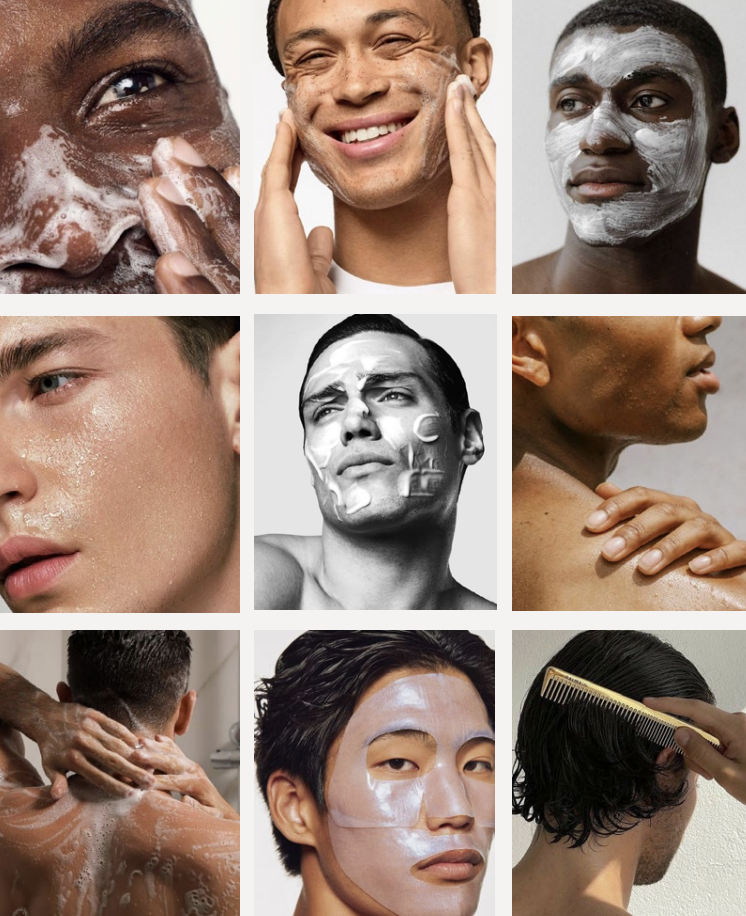
Men's skincare has moved from niche to mainstream, and the numbers back it up: 24% of Instagram's leading skincare posts in 2025 were by or featured men, while search volume for men's skincare routines has grown by 857% over the past five years. This isn't a passing trend, it's a fundamental shift in how beauty is being consumed and discussed online.
The Data Behind the Shift
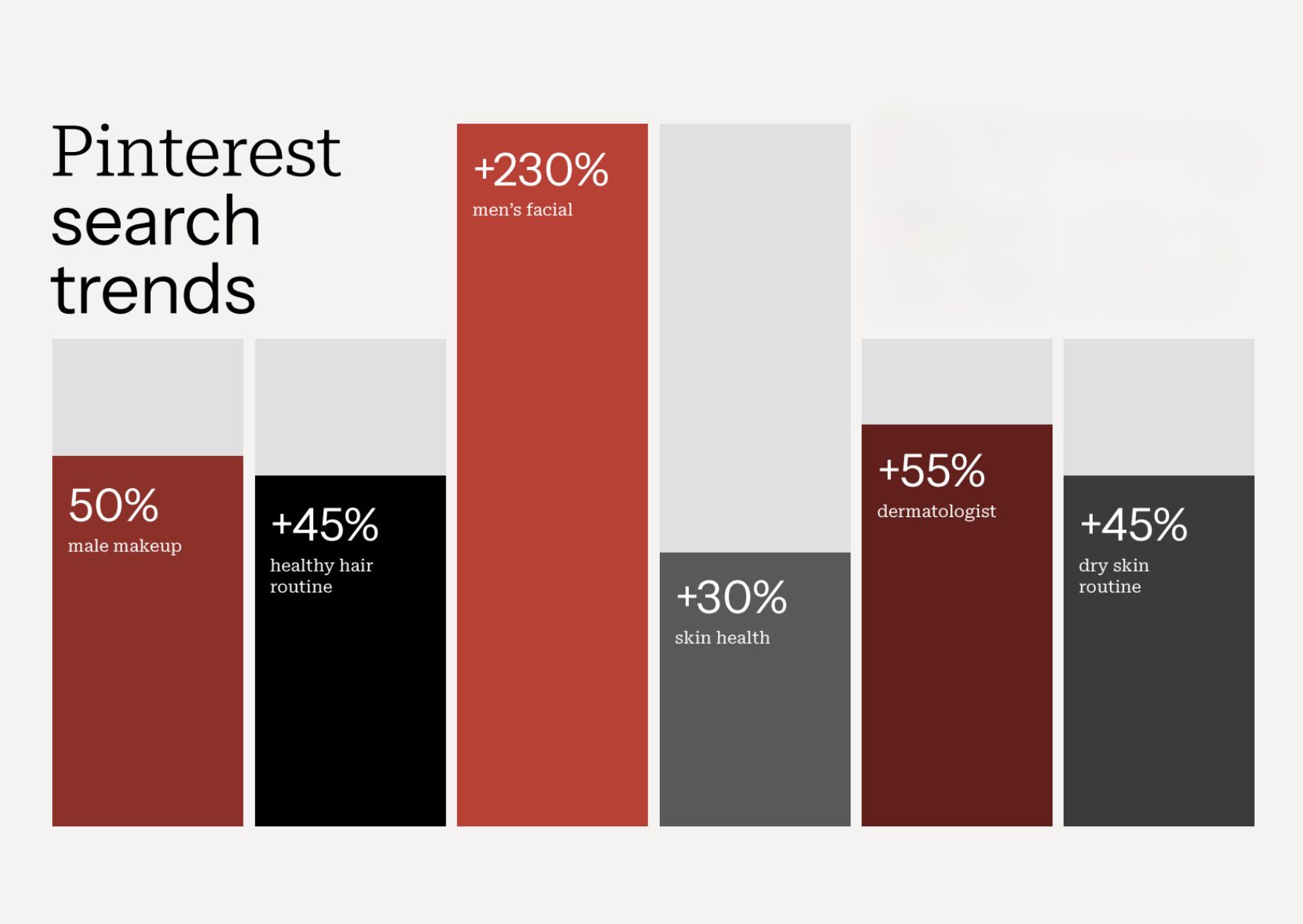
Pinterest search trends tell a similarly striking story. Searches for "male makeup" are up 50%, and demand for "men's facial" has grown by 230%. Men are also increasingly searching for "healthy hair routine" (+45%), "skin health" (+30%), "dermatologist"(+55%), and "dry skin care routine" (+45%). Together, these numbers point to men engaging with skincare not as a one-off purchase, but as an ongoing routine and area of self-education.
"Men showing up in beauty is no longer a novelty, it's a full-blown movement. From TikTok tutorials to skincare deep dives, male creators aren't just joining the conversation, they're driving it. This rise speaks to a broader cultural shift: beauty is being redefined as universal, not gendered. We've moved from 'borrowing her cleanser' to men being the star of the skincare routine and audiences are eating it up. For brands, the opportunity is bigger than ever." - JR, Group Account Director.
Male-Fronted Campaigns Are Performing
Skincare ads featuring men are already delivering strong results. Rahi Chadda's campaign for Dior Beauty achieved a 4% engagement rate, while racing driver Ollie Bearman's ad for La Roche-Posay hit 2.9%. Both figures sit well above typical benchmarks for beauty advertising, suggesting audiences are actively engaging with male-fronted skincare content.

Couples' Content Is a Breakout Format
One of the most effective ways men's skincare content is spreading is through couples' dynamics. Comedy creator Fred Asquith's skit about ice rolling has racked up 3.8 million views, 306,000 likes and a 73% engagement rate. Anthony Cushion's "forced" skincare routine by his husband drew 3.4million views at an 11.5% engagement rate. Creator Ling Khac Tang regularly uses her products on her husband, and Vienna-based creator Siqizhouu's video of her skincare routine on her boyfriend has passed 541,000 views, 66,500 likes and 7,200 favourites.
The format works because it lowers the barrier to entry: skincare is introduced to a male audience through humour and relationship dynamics, rather than as a direct pitch.
"Working with couples on beauty content provides an arena for an education piece that is both relatable and aspirational. It opens up a safe space for men to talk about skincare as well as highlighting the multiplicity of the product." - Arabella, Head of Growth at CORQ.
What This Means for Brands
- Product marketing: men's skincare no longer needs to be positioned as a separate, gendered category, the search data shows demand for the same routines and concerns as the wider skincare market.
- Creator partnerships: male creators and couples' content offer two distinct, high-performing entry points; one built on authority, the other on relatability.
- Content format: comedy and relationship dynamics are proving to be an effective, low-pressure way to introduce skincare education to male audiences.
- Campaign talent: male-fronted campaigns are already outperforming category benchmarks, making the case for bigger investment in male talent.
Key Takeaway: Men's skincare has moved from the margins to the mainstream, brands that lean into male creators, couples' content and search-led product education stand to capture a fast-growing, highly engaged audience.
Download our free Beauty Playbook for more actionable insights to keep your brand ahead.


.jpg)



.png)
