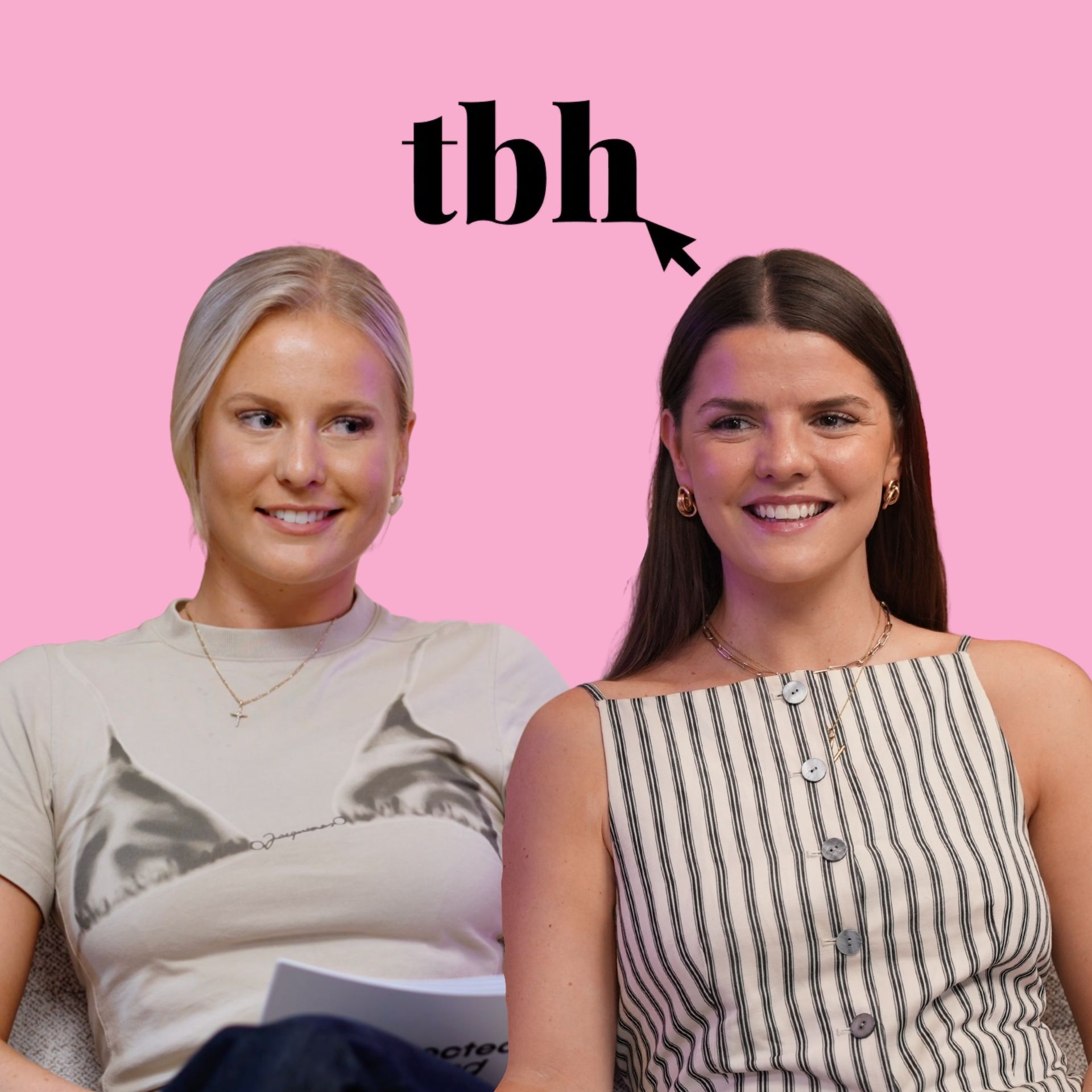
In this episode of Connected Thinking, our Talent Director, Amelia Hobson sits down with Verity Park, founder of tbh Talent, a leading influencer management agency.
Starting her career at Gleam, she managed creators including Grace Beverley and Olivia Neill, playing a key role in conceptualising and launching Grace’s sustainable brand, TALA, as well as brokering Olivia’s exclusive podcast deal with Spotify.
Since then, Verity has built a people-first agency that provides 360° representation to some of the UK’s top digital creators, including Hannah Lowther, Ellie Middleton and Remi Idowu. In under two years, she’s grown the agency’s roster to 20 exclusive and over 150 non-exclusive creators, reaching a combined audience of over 25 million.
From building a culture-first talent agency to pioneering a more data-driven approach to management, Verity shares the learnings that have shaped her entrepreneurial journey so far and how brands can build stronger, longer-lasting partnerships with influencers.
You launched tbh talent about 3 years ago and have already built a powerhouse. What pushed you to start your own talent agency and what was the moment you knew it was the right move?
I started at Gleam in 2017 as a talent coordinator where I represented Grace Beverley and Olivia Neil. It was a massive growth stage for them and there was so much opportunity to do so much. A big part of what I did at Gleam was start up TALA with Grace, which took up a significant portion of my time. It's fair to say that 90 to 95% of my career has been managing talent. It’s been amazing because I have never had a moment where I am clock watching at work, which is a crazy thing to say in what’s coming up to a decade of working. I did five years at Gleam, and then I had started a candle business on the side.
Through all my experience building direct to consumer businesses with a side of influencer marketing, I decided that I wanted to carry on with influencer marketing. The reason I did was because I started content. I started a TikTok page and I wanted to democratise knowledge within the influencer space, which is essentially my mission now and the tbh mission with the whole team. I found that when I was at Gleam, we were unintentionally gatekeeping knowledge in the influencer space. Not because we were intending to, but because we were the first of our kind and we were representing the biggest talent.
There was this subsection of creators who didn't have access to the information they needed to be able to price themselves properly, negotiate on their own behalf, or manage themselves and build sustainable careers in the space - like branch out into podcasting, branch out into books, or wherever else it makes sense for them to go strategically. I started this TikTok page and it became clear quite quickly that lots of people wanted this information. I decided to launch the non-exclusive roster, which is about democratising knowledge in the influence space and giving access to smaller creators or emerging creators.
Off the back of that, big creators were coming to me and asking for management, so tbh really naturally formed. I am very lucky to say we have done minimal outreach for creators. It's only creators that we think ‘are doing something really cool’ or ‘are saying something really interesting’ who we would outreach to for management. We found that a lot of creators have come to us because of that big gap in knowledge. Because of the knowledge I have from working at Gleam and the knowledge that lots of people don't have, we're able to add significant and immediate growth to creators that we choose to work with.
It's so special to be able to have such an impact on creators careers, particularly creators who we think are doing something really exciting.
As a female founder in the creator economy, what’s been your biggest learning curve and wins?
I've struggled with the fact that as a female founder, I under-promise and overdeliver. I have found that often it's a tendency for male counterparts to overpromise and occasionally underdeliver. I have had that experience working with people, I'm not saying that's everyone, but I think it's aligned with the approach where for job applications, men are more likely to apply when they don't have the relevant experience, where women will only apply when they have evidence of the relevant experience.
We lose out on business sometimes because I will not do that. I am never going to over promise to a talent, I will only ever under-promise and overdeliver. The learning there is that that’s okay. I might lose out on the business initially up front, but I will get that repeat business when they do work with us because we're only ever exceeding their expectations.
How do you balance being the face of your business while also being behind the scenes building it?
With great difficulty! I find they’re two different brains. My creating content brain requires space, creativity and time. The business side requires pace and integration and not a great deal of creativity. I find balancing them hard. It's also worth saying that I do have help. I'm not doing all of this by myself, I look at other founders sometimes or at influencers, creators, and you're thinking, how are they doing all of that? The other thing that's worth saying is it's never been perfect to me. I always look at it and think “that's not good enough” or “that needs to be better” or “this needs to be better”.
For me, the talent management side of the business always has room for improvement but I am incredibly proud of how that looks, that is top tier management. The content and the educational information we're putting out is top tier. Our content needs work, I want it to be continually evolving, but ultimately, I'm not a content creator. I'm just using it as a vehicle to talk about the good stuff that we're doing on the talent management side.
You’ve led some standout collaborations, from podcast exclusives to brand launches. What’s coming up next that you’re most excited about?
There's lots going on at the moment which is really exciting On the tbh side, we've got a lot of big changes coming. A big focus has been on non-exclusive roster, but we have made the incredibly sad decision to close that chapter. That's always been about lifting the lid on the influencer space and sharing knowledge. I think we're coming up with a better way to do that which is probably going to be a 2026 project.
In terms of what's going on with the talent, there's so much, I don't even know where to begin! We’ve got Hannah Lowther's live tour at the end of the year, which is really exciting. We've got five different shows which will be our first live tour with the talent.
We're seeing influencers move beyond just social into books, live shows, theatre. How are you supporting that evolution with your talent?
It's such an important part of talent management. It doesn't mean that you necessarily need to do something with every single creator. I think it's about choosing the right thing to do and also being conscious of the talent capacity and what makes sense for them. We've got to take it right back to the data for talent.
At 6 months, we build a strategy with them which is informed only by data. We don't write strategies for talent unless we have data. I know lots of management will write a strategy for a talent as part of the pitch based on their wish list without speaking to the talent or without seeing the data. We don't do that. We create strategies based on the talent capacity and the data, which is what the talent wants.
You’ve built a personal brand that people trust. How does that amplify or shape your work with talent and clients?
It's all about long term partnerships for us. It means that you can be so much more creative. You can engage your audience in the way they want to be engaged and how we do it really varies. A lot of the time it will start with smaller partnerships. It will be a bit of a test and learn and if the talent is doing really well, we want to prove that we're going to add value too.
We're fine with doing those test and learn partnerships. I know the talent that I work with are amazing. I know they add value, if we need to prove that before we work on a long term partnership, that’s no problem. Ultimately what everyone wants out of a long term partnership is it to be fair for the value the talent is going to bring, but we also want it to be good value for the brand.
What are some creator economy trends you’re watching closely right now, and how are you preparing your talent for what’s next?
I'd say it's a big mixture, it depends on the brand and the agency. Sometimes we'll get different agencies for the same brand with different KPIs and objectives. I am seeing a lot of brands wanting to access talent communities in real life. We have a lot of creators who have communities like Unmasked with Ellie Middleton, Sober Girl Society with Millie Gooch, and Netball Noir with Michele.
We have lots of brands who want to get their products into the hands of consumers and get their brand, their brand sponsors or their brand affiliates in front of their consumers to get feedback and have that real life feeling alongside content.
Even during brunches and breakfasts that I go to with brands, it's a question that's coming up. Do your creatives have communities? How can we access their communities in real life? Can we do an event with the talent? Even if they don't have communities, can we do an event with them?
Favourite book or podcast you’d recommend?
I would recommend Your Boss Era by Heather Elkington. She talks all about leadership and management and how to be a good manager. I think it's such an amazing resource if you're managing anyone or if you're leading a team, it's a must read.
Best piece of advice you’ve received?
My dad probably gave me the best piece of advice when I was starting the business. I had a tendency to not be sure of my decisions, I'd always want to rely on someone else to give me their opinion and to make a decision based on what their opinion is.
My Dad's advice was, the most important thing you can do is just make the decision. You just need to move forward, make a decision and learn from that decision. If it's wrong, you'll learn, and if it's right, brilliant!

.jpg)